
Ravines and a 100-foot bluff
Hydroseeding in Highland Park, IL
Slope stabilization and lawns on some of the steepest residential ground on the North Shore.
- No-charge yard walk-throughs with a quote in writing
- Seed mix matched to the sun, shade and soil on your lot
- Watering and first-mow instructions in writing with every job
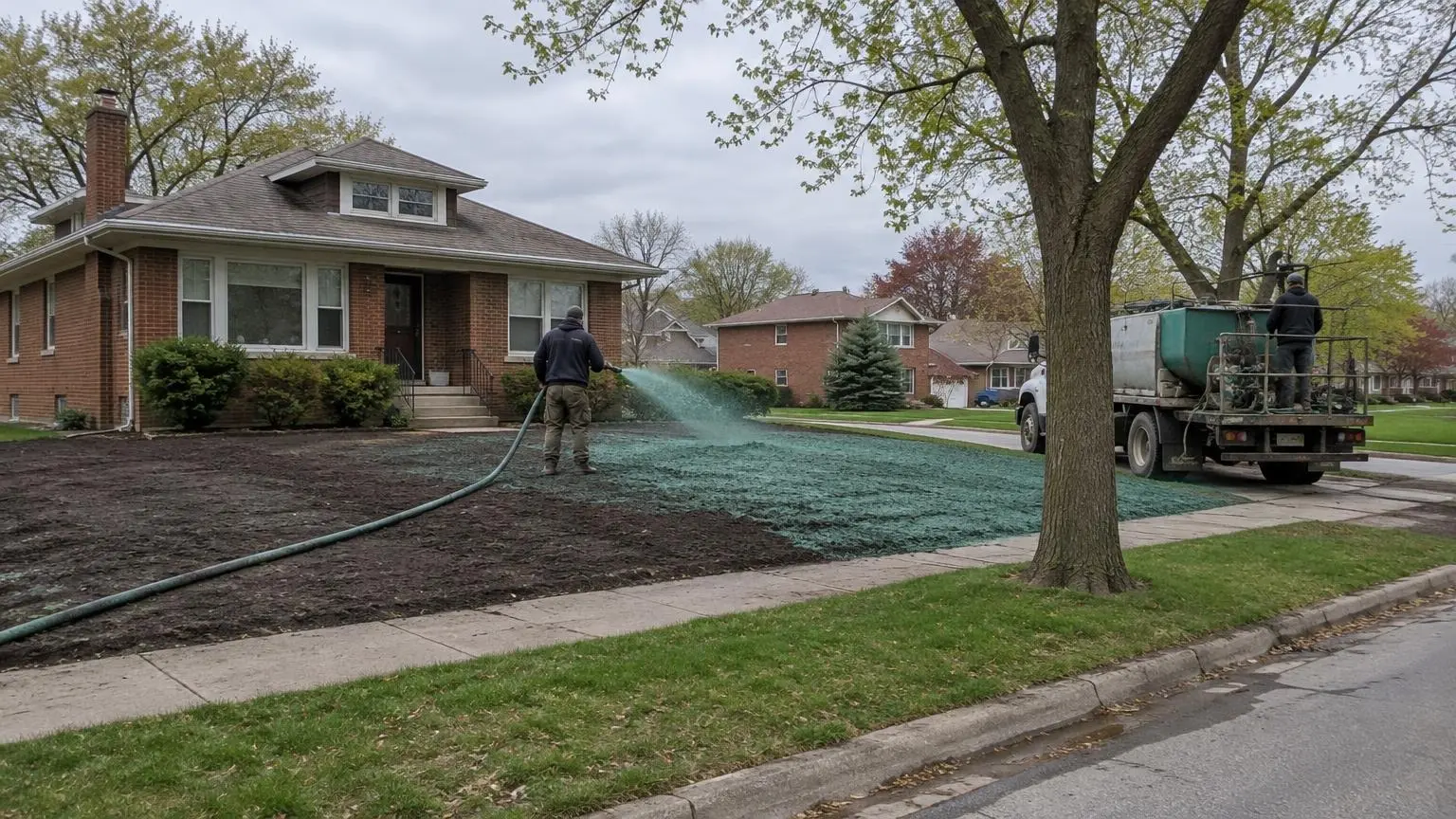
Ravines Change Everything About a Lawn
Hydroseeding in Highland Park has to account for terrain that most Chicago suburbs do not have. A bluff about 100 feet high runs along 6 miles of Lake Michigan shoreline, and deep, wooded ravines cut up to a mile inland. Elevations in the city range from about 580 to 725 feet. A backyard that ends at a ravine edge is a very different seeding job from a flat lot a few blocks west.
Ravine edges
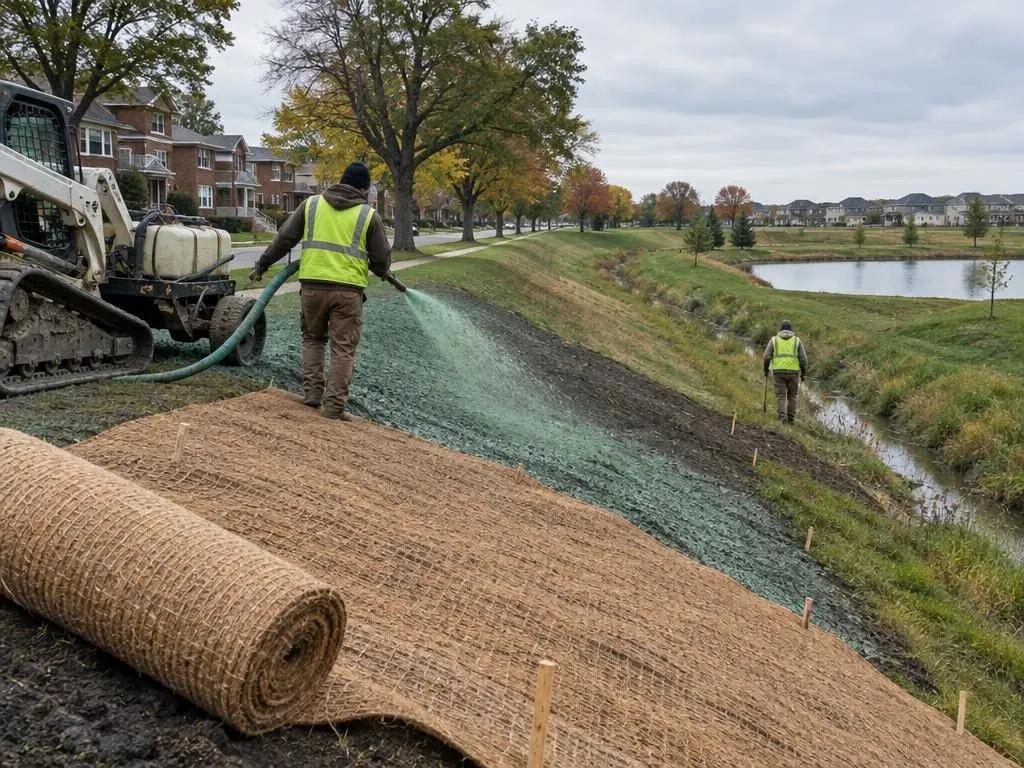
The top of a ravine is where lawns and erosion meet. Runoff from roofs, driveways and patios that spills over the edge cuts into the slope and carries soil down into the ravine. Before seeding, we look at where water leaves the yard and try to spread it out or route it to a stable outlet. Then we seed the edge with a heavier mulch or install erosion control blankets on the first steep stretch.
Shade under the canopy
Wooded ravine lots are shady, and turf grass struggles there. On the slope itself, a shade-tolerant mix or a native seed blend often holds soil better than lawn grass. We talk through what you want the slope to look like before choosing seed.
Bluff-top lots
Near the lake, the bluff face is not a place for ordinary lawn seed. We focus on the flatter top of the lot, keep water from pouring over the edge and leave the face itself to specialists who handle bluff engineering.
A city named for its setting
Highland Park took its name from its elevated, parklike setting above the lake. That same high ground is why careful grading matters here: water always finds the shortest way down.
Get a free estimate or call (312) 598-0845.
Highland Park Terrain Facts
- Lakefront bluff. A bluff about 100 feet high runs along 6 miles of Lake Michigan shoreline in Highland Park.
- Deep ravines. Deep, wooded ravines reach up to one mile inland from the lake.
- Elevation range. Elevations in the city range from about 580 to 725 feet above sea level.
- Name origin. The city was named for its elevated, parklike setting relative to the lake and was incorporated in 1869.
Highland Park Questions
Can you seed the slope down into my ravine?
We can stabilize the upper slope with blankets, bonded fiber matrix or native seed. Very steep or failing slopes may need an engineer first.
Why does the grass at the edge of my ravine keep dying?
Usually shade plus runoff spilling over the edge. Redirecting water and using a shade-tolerant mix helps.
Do you work on the lake bluff face?
No. We seed and stabilize the lot above it and keep runoff off the face, but bluff engineering is specialist work.
Is native seed an option on wooded slopes?
Yes. Deep-rooted native plants often hold a shady slope better than turf.
Free Estimates in Highland Park, IL
Ravine or bluff-top lot? Ask for a Highland Park estimate.
Hydroseeding Near Highland Park
- Hydroseeding in Chicago, IL
- Hydroseeding in Naperville, IL
- Hydroseeding in Aurora, IL
- Hydroseeding in Joliet, IL
- Hydroseeding in Plainfield, IL
- Hydroseeding in Oswego, IL
- Hydroseeding in Yorkville, IL
- Hydroseeding in Elgin, IL
- Hydroseeding in Huntley, IL
- Hydroseeding in Lockport, IL
- Hydroseeding in Lemont, IL
- Hydroseeding in Crystal Lake, IL
- Hydroseeding in Lake Forest, IL
- Hydroseeding in Bolingbrook, IL
- Hydroseeding in New Lenox, IL
- Hydroseeding in Algonquin, IL
- Hydroseeding in St. Charles, IL
- Hydroseeding in Romeoville, IL
- Hydroseeding in Lake in the Hills, IL
- Hydroseeding in Wheaton, IL
- Hydroseeding in Minooka, IL
- Hydroseeding in Lisle, IL
- Hydroseeding in Gurnee, IL