
Sediment control for permitted sites
Silt Fence & Inlet Protection in Chicago, IL
Keeping mud on the site and out of the street, the sewer and the creek.
- No-charge yard walk-throughs with a quote in writing
- Seed mix matched to the sun, shade and soil on your lot
- Watering and first-mow instructions in writing with every job
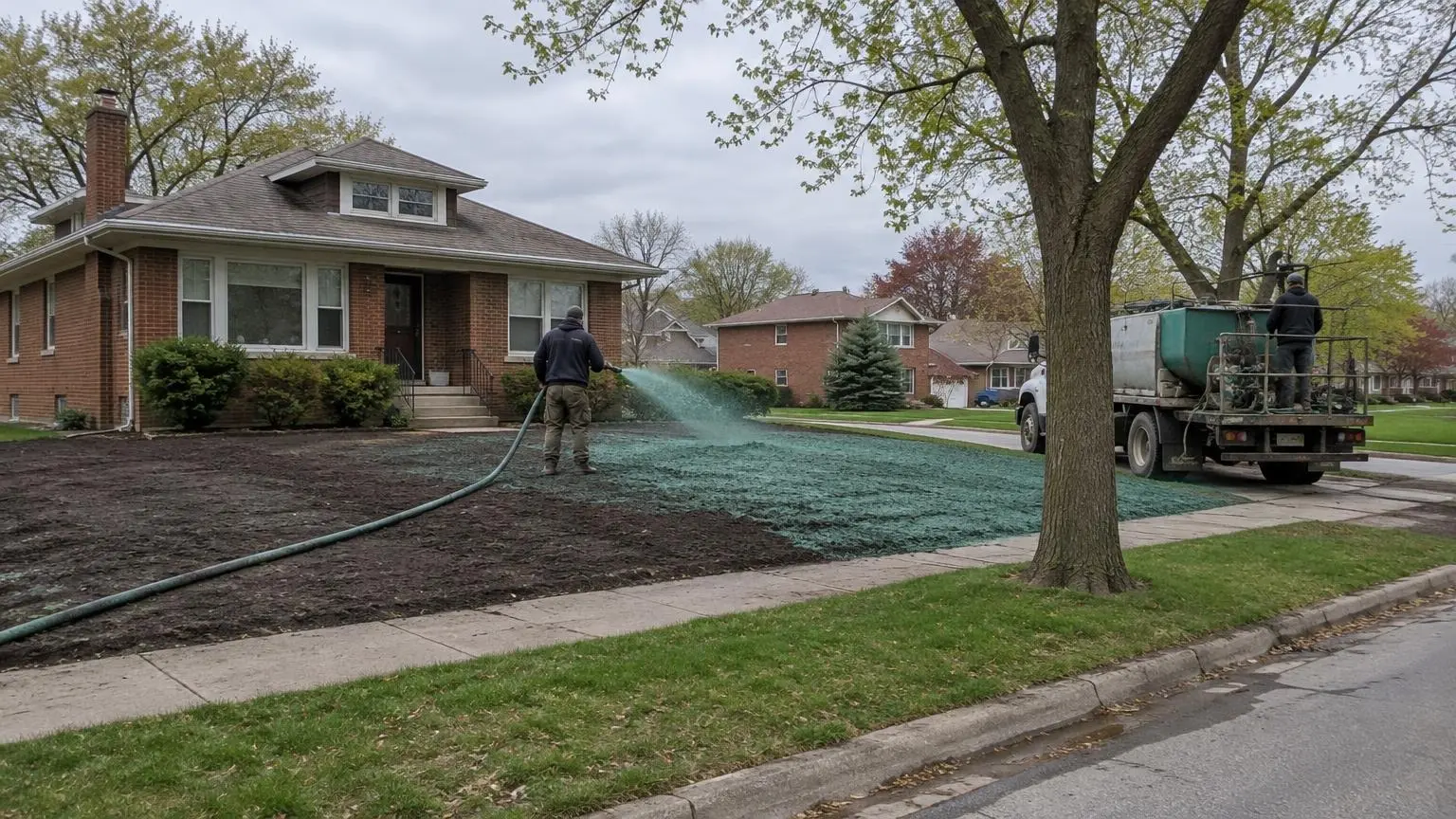
Sediment Control That Holds Up to Storms
Silt fence & inlet protection are the first lines of sediment control on most Chicago-area construction sites. Silt fence is a strip of geotextile with its bottom edge buried in a trench and staked along the downhill side of disturbed soil, where it slows runoff and lets mud settle out. Inlet protection covers or surrounds storm drains to catch sediment before it reaches the sewer. We install both for home builders, contractors and site owners, keep them working through the project, and pull them out when the ground is stabilized with grass.
When it is required
The Illinois EPA's general permit for construction site stormwater applies to projects that disturb one acre or more, or that belong to a "larger common plan of development or sale" (the permit's own wording), and coverage requires a Storm Water Pollution Prevention Plan. Those plans almost always show silt fence and inlet protection. In Cook County, the MWRD's Watershed Management Ordinance regulates soil erosion and sediment control for development, and permittees must notify the district's field office before starting work. Villages and counties around the metro often add their own requirements, even for smaller jobs. We work to whatever plan you have; if you are not sure what applies, your engineer or village is the place to check.
Why the local soil matters
Chicago-area soils are fine-grained. The USDA's descriptions of common soils such as Markham and the state soil, Drummer, describe silt loams and silty clay loams formed in loess and glacial till. Fine silt stays suspended in water longer than sand, which is exactly why runoff from a graded lot here turns the gutter brown so quickly, and why silt fence needs to be trenched in properly and kept clean to work. Fabric that is laid on top of the ground instead of buried just lets muddy water run underneath.
How we install it
We follow the layout on the plan, running fence along the contour, not straight downhill, and turning the ends uphill so water does not just run around them. The bottom of the fabric goes into a trench and is backfilled and compacted so flow cannot sneak under. Stakes go on the downhill side at the spacing the detail calls for. Where a site needs extra strength, such as long slopes or areas with heavy flow, we use stabilized or wire-backed fence. For inlets, we use filter fabric, inlet bags, gravel and mesh or other devices; a drain in a paved street gets a different device than one sitting in open dirt.
Keeping it working
Silt fence is not a set-and-forget item. After big storms, sediment builds up behind it, fabric tears and stakes get knocked over by equipment. Inlet bags fill and need emptying. Many permits require routine inspections and repairs. We offer maintenance visits to clean out sediment, re-trench sagging runs and replace damaged sections, so your inspector sees controls that are actually working. We note what we fixed so you have it for your records.
Coming out at the end
Sediment controls should stay until the disturbed area is stabilized, usually meaning grass has taken hold. Pulling them too early just moves the mud problem to the last storm before closeout. Because we also hydroseed and stabilize slopes, we can plan seeding and silt fence removal together, so the fence comes out once the grass behind it is doing the work.
Construction entrances and other controls
Silt fence and inlet protection rarely stand alone. Most plans also call for a stabilized construction entrance, usually a pad of coarse stone at the driveway so trucks shed mud before reaching the street, along with concrete washout areas and protection for stockpiles. We focus on the fence, inlets, seeding and blankets, and we coordinate with whoever builds the entrance so the controls work together. Tracking mud into the street is one of the most visible problems on any site, and neighbors and inspectors notice it quickly, so sediment control on the perimeter only works if the gate is handled too.
Winter and wet-season work
Frozen ground makes trenching slow and sometimes impossible, so we try to set fence before ground freezes on projects that will run through winter. Spring thaw and May storms are when most failures show up, so a maintenance visit in early spring is worth scheduling. Snow plowed or piled against fence lines can also flatten it, so we check runs near drives and parking areas once the snow melts. Damaged sections are cut out and replaced rather than patched with loose fabric.
Choosing silt fence contractors
Look for a crew that trenches the fabric in, sets it on the contour, maintains it after storms and coordinates with the seeding schedule. Ask for a written estimate that separates installation, maintenance and removal. Figures in the table are 2025 transportation-department unit prices (January 2025 schedule), given as reference points; the written estimate we give you after the site visit is the price we hold to.
Sediment Control Services
Installed to the plan detail and kept working until closeout.
Silt fence installation
Trenched, staked fabric set on the contour along the low side of disturbed ground.
Stabilized and wire-backed fence
Heavier fence for long slopes and areas with concentrated flow.
Inlet protection
Filter fabric, inlet bags, gravel and mesh or other devices on storm drains.
Sediment control maintenance
Cleaning out sediment, re-trenching and replacing damaged fence after storms.
Removal at stabilization
Fence and inlet devices removed once grass has taken hold.
Seeding behind the fence
Hydroseeding and blankets so the site stabilizes and controls can come out.
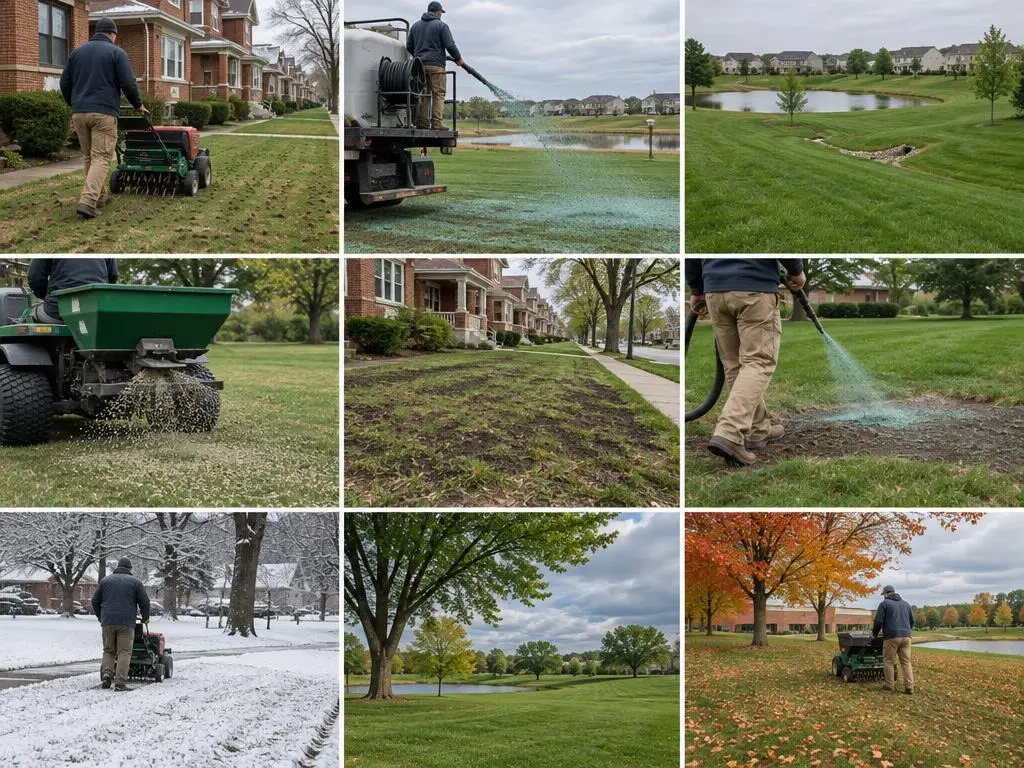
Typical Silt Fence and Inlet Protection Costs
| Item | Published unit price |
|---|---|
| 2025 transportation-department unit prices: standard silt fence, no backing, per 100 linear ft | $378 |
| Same list: reinforced (stabilized) silt fence, per 100 linear ft | $748 |
| Same list: fabric barrier around one storm inlet | $102 |
| Same list: straw bales around one storm inlet | $135 |
| Same list: sandbags around one storm inlet | $141 |
| Same list: gravel-and-mesh filter at one storm inlet | $172 |
Agency unit prices shown for reference, not Chicago quotes. Site length, soil, access and maintenance frequency shift the total. Guide ranges, not a bid. The bid we hand you after the visit is binding.
How We Handle Sediment Control
1. Plan check
We review your erosion control sheet or walk the site to lay out runs and inlets.
2. Install
Fence trenched and staked on the contour; inlet protection placed on each drain.
3. Maintain
After storms or on a set schedule, we clean, repair and re-trench as needed.
4. Stabilize
Disturbed areas hydroseeded or blanketed so they can stand on their own.
5. Remove
Controls pulled once grass has taken hold and the site is stable.
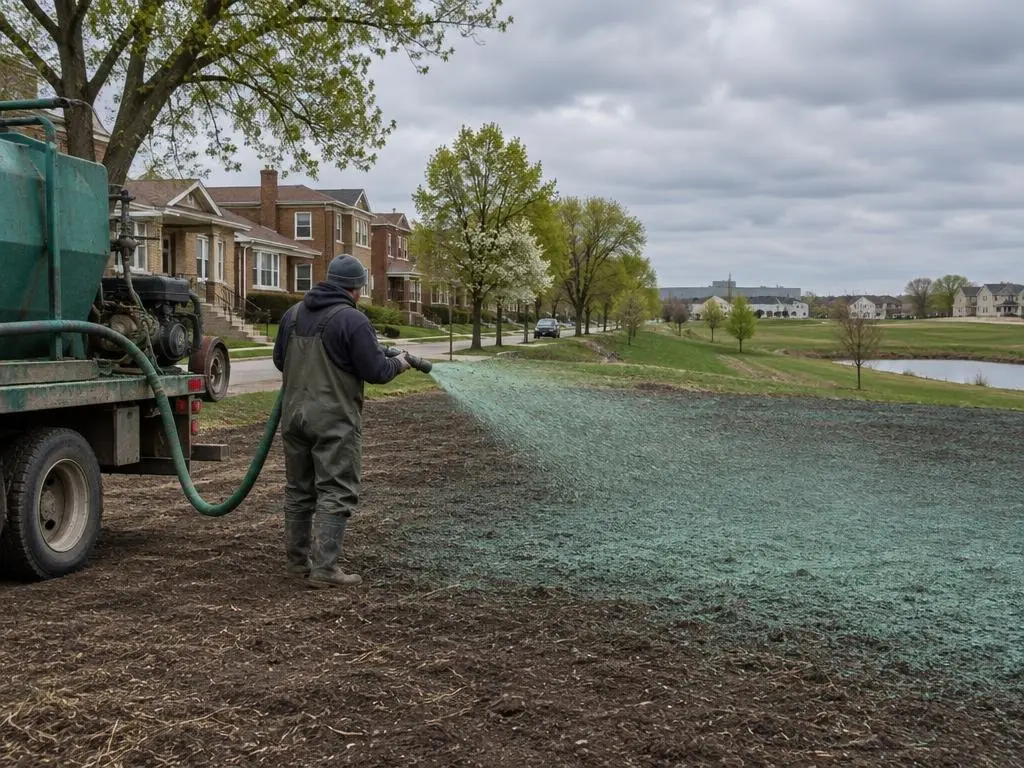
Why Choose Us for Silt Fence & Inlet Protection
Trenched in, every time
Fabric goes into the ground, not on top of it.
Maintenance offered
We come back after storms so controls keep working.
Planned with seeding
Silt fence comes out when the grass is ready, not before.
Silt Fence & Inlet Protection Questions
How deep should silt fence be buried?
The bottom of the fabric goes into a trench and is backfilled and compacted, at the depth your plan detail shows. If it is laid on the surface, muddy water just runs under it.
My village is permitting one new home. Will it want silt fence around the lot?
Many villages and counties require sediment controls on single-lot construction, and lots that are part of a larger subdivision fall under the Illinois EPA construction permit. Check with your building department or engineer.
How often does silt fence need maintenance?
After significant storms and whenever sediment builds up or fabric is damaged. Your permit or SWPPP may set a specific inspection schedule.
When can silt fence be removed?
Once the area it protects is stabilized, usually when grass has established. Your plan or inspector will confirm.
What is inlet protection?
A filter or barrier at a storm drain, such as fabric, an inlet bag, sandbags or gravel and mesh, that catches sediment before it enters the sewer.
Silt Fence & Inlet Protection Service Areas
- Hydroseeding in Chicago, IL
- Hydroseeding in Naperville, IL
- Hydroseeding in Aurora, IL
- Hydroseeding in Joliet, IL
- Hydroseeding in Plainfield, IL
- Hydroseeding in Oswego, IL
- Hydroseeding in Yorkville, IL
- Hydroseeding in Elgin, IL
- Hydroseeding in Huntley, IL
- Hydroseeding in Lockport, IL
- Hydroseeding in Lemont, IL
- Hydroseeding in Crystal Lake, IL
- Hydroseeding in Highland Park, IL
- Hydroseeding in Lake Forest, IL
- Hydroseeding in Bolingbrook, IL
- Hydroseeding in New Lenox, IL
- Hydroseeding in Algonquin, IL
- Hydroseeding in St. Charles, IL
- Hydroseeding in Romeoville, IL
- Hydroseeding in Lake in the Hills, IL
- Hydroseeding in Wheaton, IL
- Hydroseeding in Minooka, IL
- Hydroseeding in Lisle, IL
- Hydroseeding in Gurnee, IL
Get a Silt Fence & Inlet Protection Estimate
Silt fence and inlet estimates for Chicago-area sites.