
Builders, developers and site managers
Commercial & Builder Hydroseeding in Chicago, IL
Acres of bare ground covered fast, with the mulch rates and seed mixes your plans call for.
- No-charge yard walk-throughs with a quote in writing
- Seed mix matched to the sun, shade and soil on your lot
- Watering and first-mow instructions in writing with every job
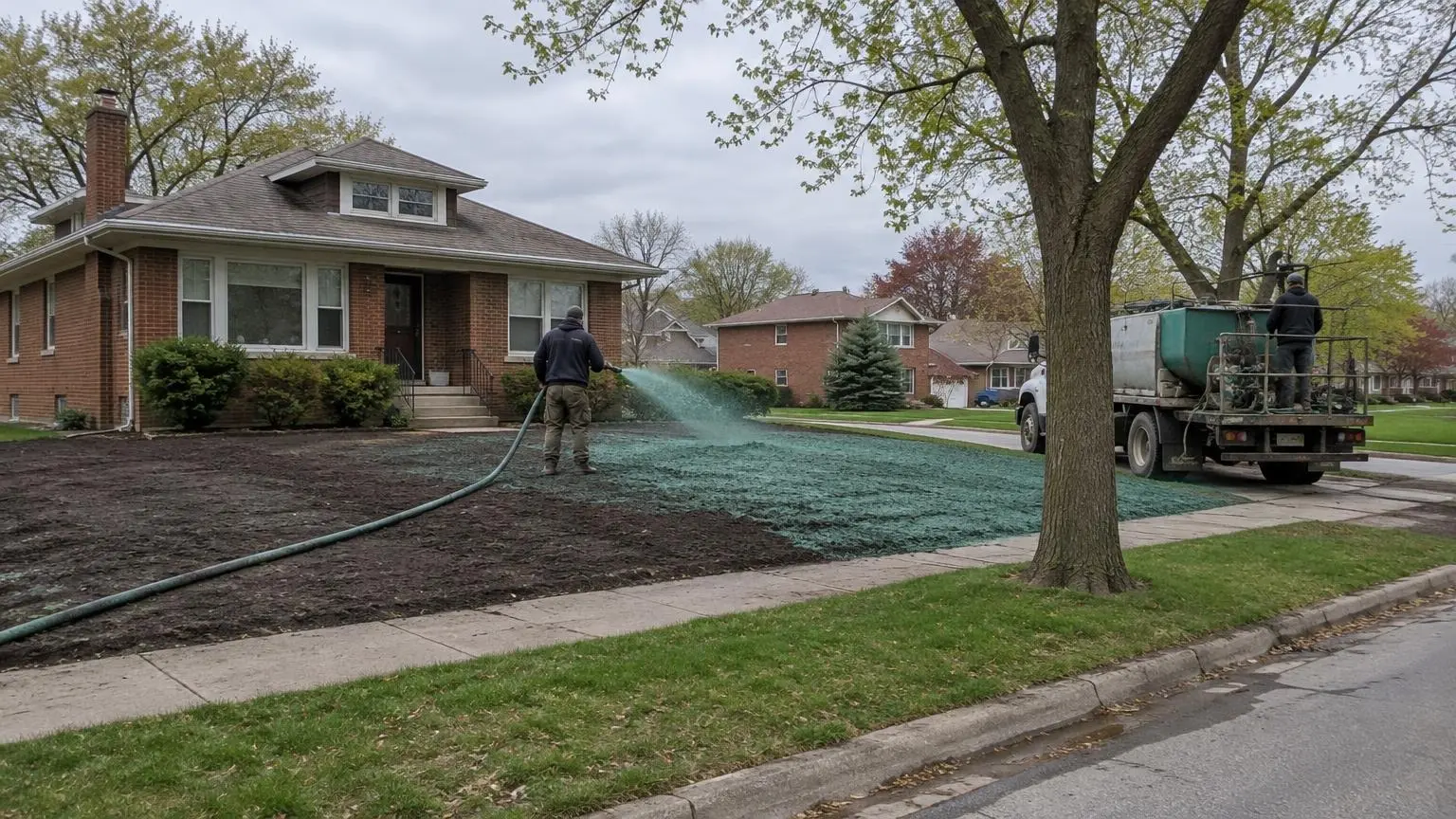
Covering Bare Ground at Site Scale
Commercial & builder hydroseeding covers the jobs that are measured in acres instead of square feet: subdivision lots and parkways, detention and retention basins, office and warehouse grounds, school and park district fields, utility corridors and road shoulders around Chicago and the collar counties. For builders and general contractors, it is often the last item between a finished building and a closed-out permit. Among hydroseeding contractors, the work here is less about looks and more about getting soil covered and stable on schedule, at a rate the plans and the inspector accept.
Why sites get seeded early
Bare dirt is a stormwater liability. The Illinois EPA defines land disturbance as soil exposed by clearing, grading or excavation, and its general construction permit covers sites disturbing one acre or more, plus smaller parcels that belong to a bigger phased development. That permit requires a Storm Water Pollution Prevention Plan. In Cook County, the MWRD's Watershed Management Ordinance has covered development since May 1, 2014, including soil erosion and sediment control, and the district asks permittees to notify its field office before work begins. Temporary and permanent seeding are standard tools in those plans, and the sooner disturbed areas are covered, the less sediment ends up in silt fence, inlets and streets.
Temporary versus permanent seeding
On phased projects, areas that will be disturbed again later often get a temporary cover crop sprayed with mulch to hold them through a season. Final grades get the permanent mix: turf blends for lawns and parkways, or tougher, lower-maintenance mixes for basin slopes, berms and back lots. We spray whatever the plan specifies, and if the plan just says seed and mulch, we can suggest a mix suited to the soil, sun and maintenance the owner expects.
Working on clay ground
After mass grading, most Chicago-area sites are left with compacted subsoil. The USDA's description of the Markham soil, common on the region's till plains, lists a subsoil of 35 to 45 percent clay over very firm till, with slow permeability and a perched water table in spring. Seed sprayed straight onto that surface comes up, but slowly and thinly. Where a spec calls for topsoil respread, we confirm depth before we spray. Where it does not, we still roughen sealed surfaces so seed and mulch can grip, and we flag areas likely to pond. Those notes go to the superintendent so grading can be corrected before the seed goes on, not after it washes off.
Basins, swales and slopes
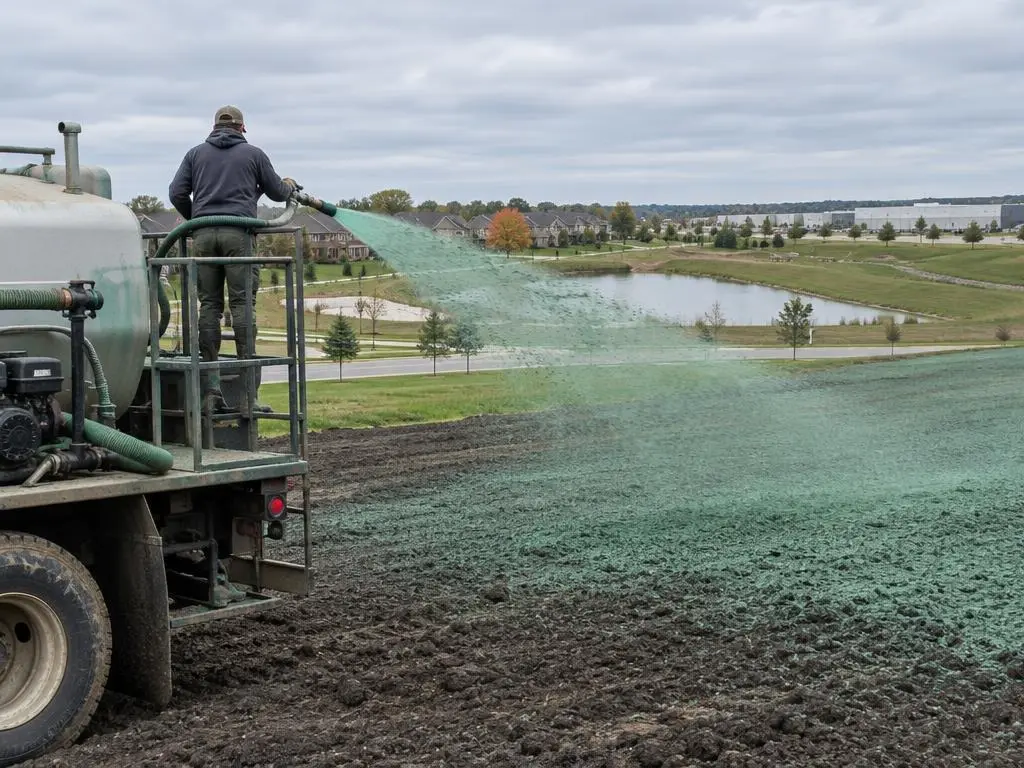
Detention basins are the hardest part of most sites. The side slopes take runoff from every storm, and the bottoms stay wet. We usually pair seed on basin slopes with a heavier hydromulch or an erosion control blanket, and we choose species that tolerate both wet feet and dry spells. Slopes steeper than a lawn mower would like get a bonded fiber matrix or blanket, priced separately so the owner can see it.
Scheduling and access
Our trucks spray from roads, curbs and driveways, and long hoses reach areas the truck cannot. On a subdivision we can seed lots as they are graded rather than waiting for the whole phase. We coordinate with your site superintendent so seeding follows final grade and comes before the next storm, and we time permanent seeding toward the late summer and early fall window that Illinois Extension recommends for cool-season grasses, with spring as the backup. Large sites need water: we bring it in the tank, and we talk with you up front about whether irrigation or follow-up watering is in the contract.
What we need from you
For a bid, send the landscape and erosion control plan sheets, the seed and mulch specifications, the phasing schedule and any notes from the village or the MWRD on stabilization deadlines. If there is no plan set, a site walk with your superintendent works too. Tell us where we can draw water on site, if anywhere, and whether trucks can reach the basins and back lots once curbs and walks are in. On occupied commercial properties we schedule around business hours and keep overspray off pavement, walls, cars and windows with shields and careful hose work. Where a site has public walks or roads, we keep the area roped off while spraying and wash down any slurry that lands where it should not. When the job is done we can provide a short written record of what was sprayed, where and when, which helps with permit closeout paperwork and with any later warranty or maintenance discussions between builder and owner.
How we price it
Commercial hydroseeding is priced by area, seed mix, mulch rate and access. Published per-acre ranges are below, including two 2023 municipal bid results for a park hydroseeding job. They are reference points, not quotes. We measure from your plans or the site and give a written estimate, and that estimate is the price.
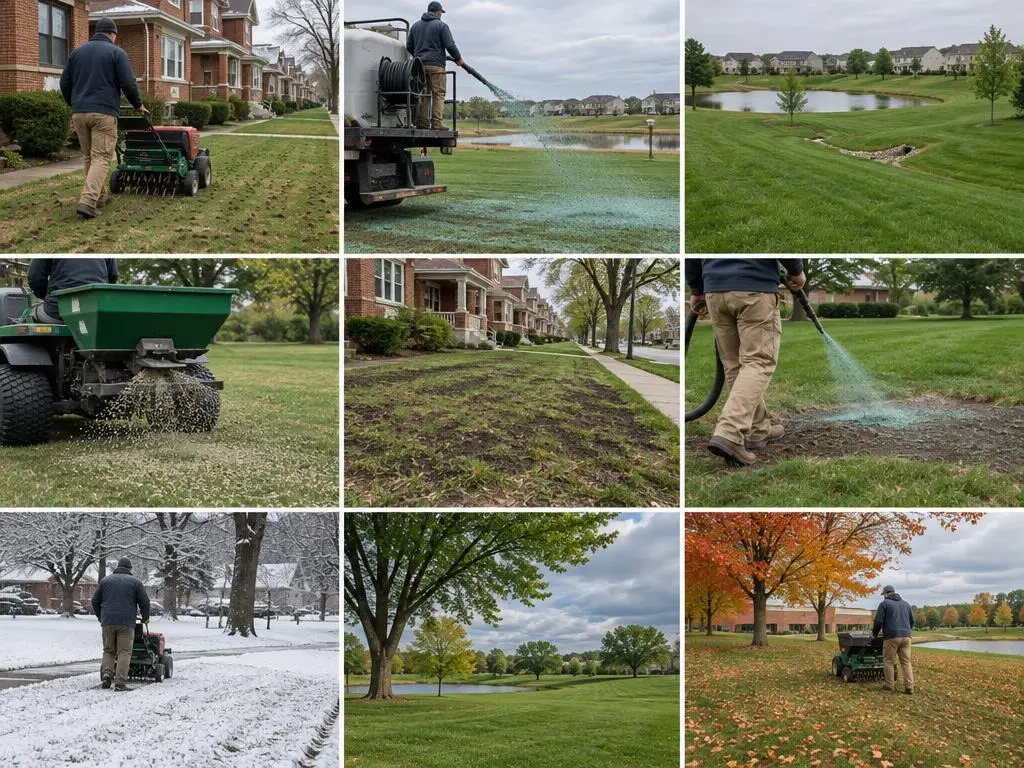
Typical Site Work
Where large-area hydroseeding usually goes on a project.
Subdivision lots and parkways
Final-grade seeding lot by lot as builders finish, plus street parkways.
Detention and retention basins
Side slopes and bottoms seeded with mixes that handle wet and dry spells.
Commercial and warehouse grounds
Turf and low-maintenance areas around buildings and parking lots.
Temporary cover
Fast cover crops with mulch for areas that will be disturbed again later.
Road shoulders and utility corridors
Long, narrow strips seeded from the truck after paving or trenching.
Punch-list touch-ups
Reseeding washouts and thin areas before final inspection.
Typical Large-Area Hydroseeding Costs
| Item | Published range |
|---|---|
| Per acre (LawnStarter) | $2,136 to $4,897 |
| Per acre (Fixr) | $2,000 to $4,000 |
| 1 acre (HomeAdvisor) | $2,600 to $8,700 |
| 1 acre (HomeGuide) | $5,000 to $8,500 |
| 2023 public park bids per acre (city of North Little Rock, AR) | $2,595 and $3,325 |
National consumer guides and one 2023 public bid, shown for reference only. Mulch rate, seed mix, access and water supply all move the price. Guide ranges, not a bid. The bid we hand you after the visit is binding.
From Plan Sheet to Cover
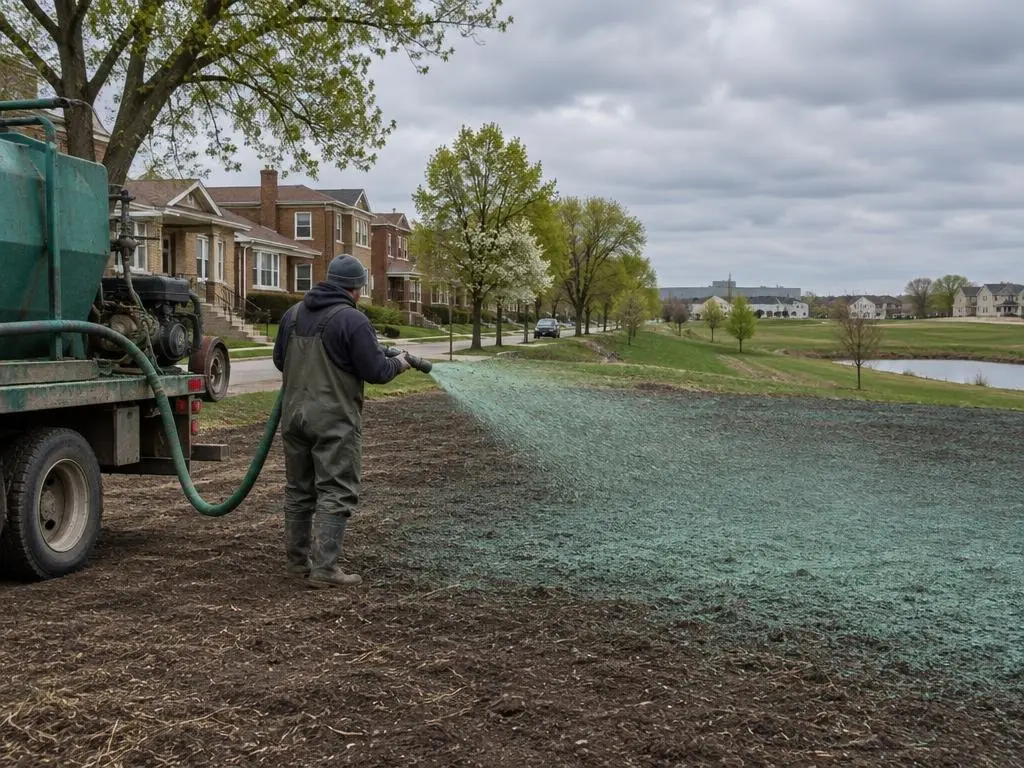
1. Plan review
We read the landscape and erosion control sheets and measure seeding areas.
2. Estimate
A written number by area, mix and mulch rate, with blankets or BFM on separate lines.
3. Coordinate
We line up dates with your superintendent so seeding follows final grade.
4. Spray
Seed, mulch and tackifier applied at the specified rates, phase by phase.
5. Walk and touch up
We check coverage and reseed washouts before your inspection.
Why Choose Us for Commercial & Builder Hydroseeding
Works to your SWPPP
We follow the seeding and mulch details in your plan.
Seeding and sediment control together
Silt fence, inlet protection and blankets from the same crew.
Phased scheduling
Lots and areas seeded as they are ready, not all at the end.
Commercial & Builder Hydroseeding Questions
How do I choose between hydroseeding companies for a commercial job?
Ask whether they will spray to the seed mix and mulch rate in your plans, whether they handle silt fence and blankets too, and how they schedule around phased grading. Get a written estimate that separates seeding from erosion control.
Do you seed detention basins?
Yes. Basin slopes usually get a heavier mulch or a blanket along with seed, and the mix is chosen to handle both standing water and dry periods.
Can you do temporary seeding on a phased project?
Yes. Areas that will be disturbed again can get a quick cover crop and mulch to hold them through a season, then permanent seed at final grade.
Who is responsible for watering on a commercial site?
That depends on the contract. We spell it out in the estimate so the builder, owner and our crew all know who waters and for how long.
Commercial & Builder Hydroseeding Service Areas
- Hydroseeding in Chicago, IL
- Hydroseeding in Naperville, IL
- Hydroseeding in Aurora, IL
- Hydroseeding in Joliet, IL
- Hydroseeding in Plainfield, IL
- Hydroseeding in Oswego, IL
- Hydroseeding in Yorkville, IL
- Hydroseeding in Elgin, IL
- Hydroseeding in Huntley, IL
- Hydroseeding in Lockport, IL
- Hydroseeding in Lemont, IL
- Hydroseeding in Crystal Lake, IL
- Hydroseeding in Highland Park, IL
- Hydroseeding in Lake Forest, IL
- Hydroseeding in Bolingbrook, IL
- Hydroseeding in New Lenox, IL
- Hydroseeding in Algonquin, IL
- Hydroseeding in St. Charles, IL
- Hydroseeding in Romeoville, IL
- Hydroseeding in Lake in the Hills, IL
- Hydroseeding in Wheaton, IL
- Hydroseeding in Minooka, IL
- Hydroseeding in Lisle, IL
- Hydroseeding in Gurnee, IL
Get a Commercial & Builder Hydroseeding Estimate
Send us your plan set for a written site estimate.