
Homeowner lawns
New Lawn Hydroseeding in Chicago, IL
A full lawn from bare ground, sprayed in one pass and timed for cool-season grass.
- No-charge yard walk-throughs with a quote in writing
- Seed mix matched to the sun, shade and soil on your lot
- Watering and first-mow instructions in writing with every job
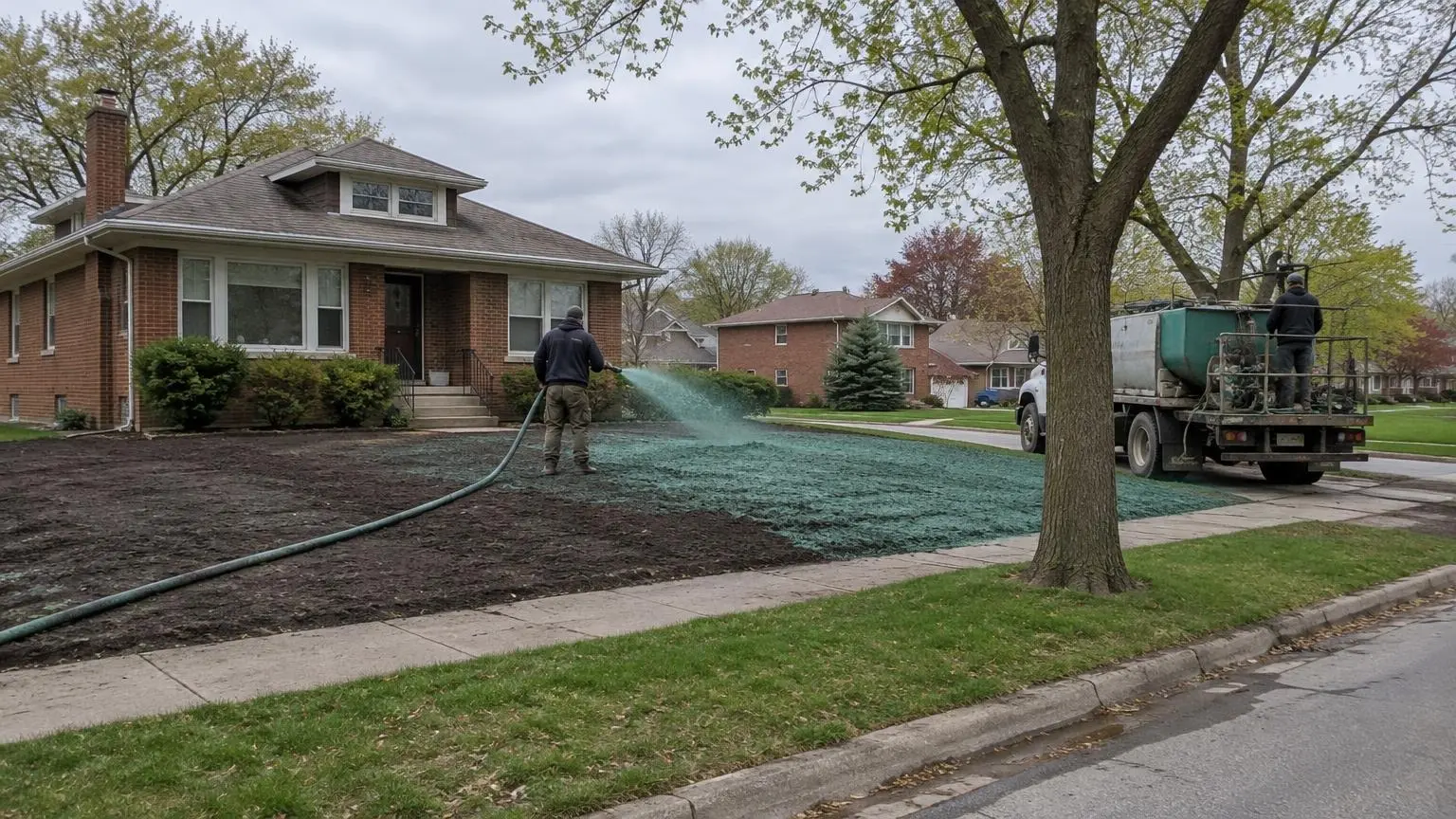
From Bare Dirt to a Mowable Lawn
New lawn hydroseeding is how we turn bare ground into grass for homeowners in Chicago and the suburbs: a new house where the builder left dirt, a yard torn up by a sewer or foundation job, a backyard regraded to stop water from sitting by the house, or an old lawn so far gone it needs to start over. We prepare the soil, spray a mix of seed, mulch, starter fertilizer and tackifier, and hand you a written plan for the weeks after. A hydroseed lawn is the middle ground between dry seed and sod, and on the slow-draining ground around here it is often the most sensible way to do a lawn installation of any size.
Who it suits
Most of our lawn seeding calls fall into three groups. New-construction owners whose lot was stripped, graded and left bare. Owners of older homes whose lawn was dug up for utility, drainage or foundation work. And people who simply want a new lawn and have decided sod is more than they want to pay for an area that size. If your yard is under about 1,000 square feet and you need it finished for an event next week, sod may be the better tool, and we will tell you so.
Soil comes first
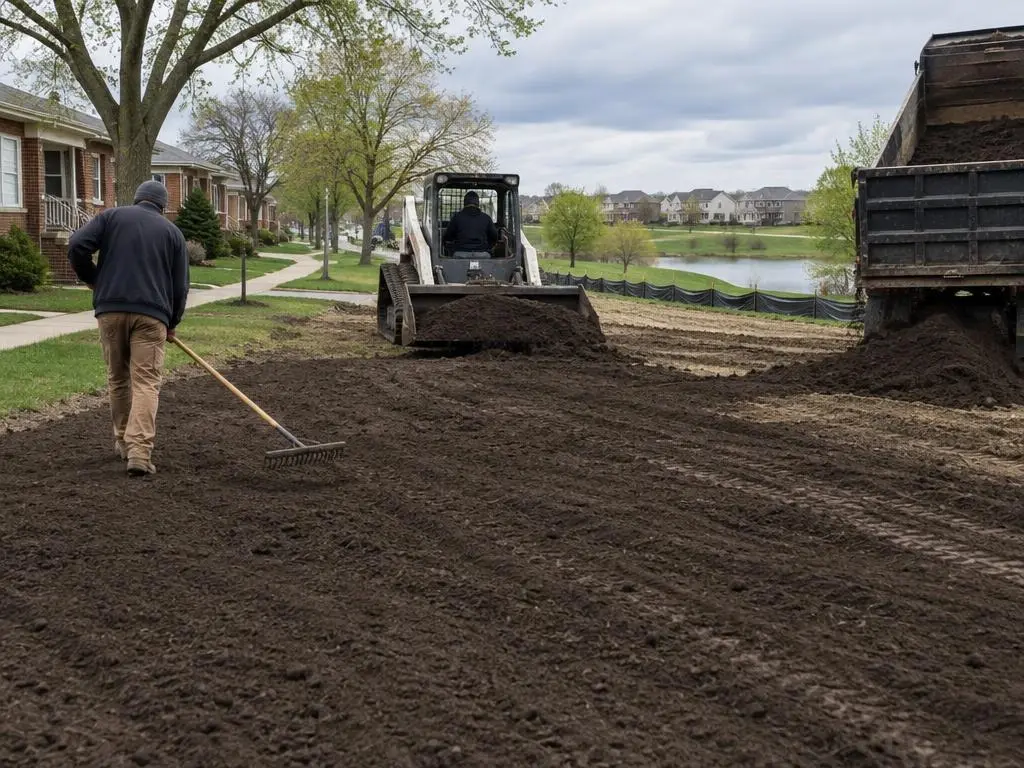
Builders often scrape off topsoil and push it around or haul it away. What is left is frequently subsoil: in much of the Chicago area that means silty clay loam over dense glacial till, which the USDA describes for soils like Markham as slowly permeable. Grass will germinate on it, but roots struggle and the lawn thins in the first dry summer. On every visit we probe the soil and look at how much dark topsoil is actually there. If it needs topsoil, we price spreading it and fine grading as a separate line, so you can see the cost. We also loosen compacted ground, rake out rocks and construction debris, and set a smooth grade that sheds water away from the house.
Choosing the seed mix
Chicago lawns are cool-season grasses. University of Illinois Extension lists typical mixes and rates: a Kentucky bluegrass blend at 1 to 3 pounds per 1,000 square feet, an 80:20 bluegrass and perennial ryegrass mix at 3 to 4 pounds, a 50:50 bluegrass and fine fescue mix at 3 to 5 pounds, and a tall fescue blend at 6 to 9 pounds. Extension also warns that seeding heavier than recommended can produce weak, spindly seedlings and disease. We follow those ranges and pick the mix by area. Full sun usually gets bluegrass with some ryegrass for fast cover; shade under maples and oaks gets more fine fescue; play areas and dog runs often get tall fescue for wear.
Timing in northern Illinois
Extension's recommended window for seeding cool-season lawns in northern Illinois is early August to early September, with April as the second choice. Late spring and midsummer seeding often runs into trouble because heat slows these grasses. We can spray in June or July, but you will water more, and some thin spots may need to be touched up in fall. Dormant seeding in winter is something Extension says is difficult and not suggested for homeowners, and we generally agree.
Watering and first mow
Water is what makes or breaks a hydroseed lawn. During hot spells, plan on short, light waterings two or three separate times daily through roughly the first few weeks so the mulch and seed never dry out. On clay soil, puddles and runoff come fast, so several short cycles beat one long soak. Sprouts usually appear within 5 to 7 days if warmth and moisture hold; once the grass is up, we tell you when to stretch to deeper, less frequent watering. Most lawns are ready to mow in four to six weeks, and the first mow should wait until the grass is around three to three and a half inches.
Small city yards versus suburban lots
A Chicago front yard between a bungalow and the sidewalk is a different job from a third of an acre in a newer subdivision. City lots are small, often shaded by parkway trees, and hemmed in by walks and fences, so the hose does most of the work and prep is mostly by hand. Many of the city's residential streets also have a grass strip between sidewalk and curb, and those parkways take a beating from salt, snow piles and car doors; we can seed them with the yard if your block allows it. Suburban lots are bigger and more open, which suits the truck, but they are the ones most likely to have been stripped of topsoil by the builder. In both cases the minimum job fee matters: a very small yard may cost nearly as much to hydroseed as one twice its size, and we will say so up front.
What we ask you to have ready
Before spraying day, mark sprinkler heads, invisible dog fences and anything buried shallow that we should know about. Make sure a working hose bib or irrigation system can reach every part of the area, since watering starts the same day. If you have pets, plan a temporary route that keeps them off the seeded ground for several weeks.
Hydroseeding cost
Price depends mostly on area, how much prep the ground needs, slope and access for the hose. Across the national guides, per-square-foot figures for hydroseeding run from about $0.06 at the low end to $0.35 at the high end, and most companies have a minimum job fee because a truck and crew cost the same to roll out for a small yard. Topsoil, grading and irrigation are the big extras. The table below lists published ranges with their sources. After we walk and measure the yard, the number we put in writing is locked; it does not creep up later.
What Is Included
The pieces of a new lawn job, from the ground up.
Site walk and measuring
We measure the seeding area, check soil and drainage, and note shade and slope.
Debris and rock removal
Construction scraps, gravel and clods raked out before seeding.
Topsoil and fine grading
Topsoil spread where it is thin, then raked to a smooth grade that drains away from the house.
Seed mix by area
Bluegrass, ryegrass and fescue blends picked for sun, shade and wear.
Slurry application
One pass of slurry carrying seed, mulch, starter fertilizer and tackifier, laid on in a uniform green layer.
Written care plan
Watering schedule, first-mow height and when it is safe to treat weeds.
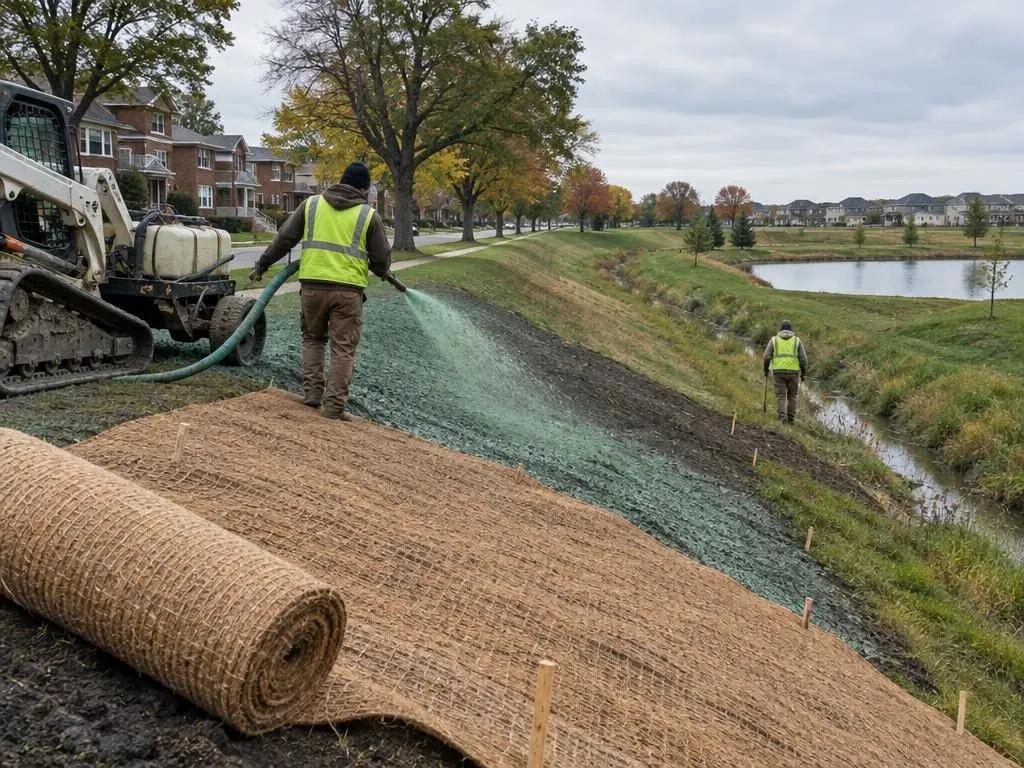
Typical New Lawn Hydroseeding Costs
| Item | Published range |
|---|---|
| Hydroseeding per sq ft (HomeGuide) | $0.12 to $0.35 |
| Hydroseeding per sq ft (Angi) | $0.07 to $0.26 |
| 5,000 sq ft lawn (HomeGuide) | $1,000 to $1,750 |
| 1/4 acre lawn (HomeGuide) | $1,900 to $2,800 |
| Minimum job fee (LawnStarter) | $300 to $500 |
| Sod for comparison, per sq ft (HomeAdvisor) | $0.35 to $0.85 |
These are national ranges from the named cost guides, not Chicago quotes. Topsoil, grading, slope and access all push the total up or down. Guide ranges, not a bid. The bid we hand you after the visit is binding.
How a New Lawn Goes In
1. Site visit
We measure, check topsoil depth and drainage, and agree on a seed mix and a date.
2. Ground prep
Debris out, compacted soil loosened, topsoil added if needed, final grade raked smooth.
3. Spray
The slurry goes on in overlapping passes until the whole area is evenly green.
4. Watering period
You water lightly and often for the first weeks following our written schedule.
5. First mow
Once the grass reaches about three inches, mow high and keep watering more deeply.
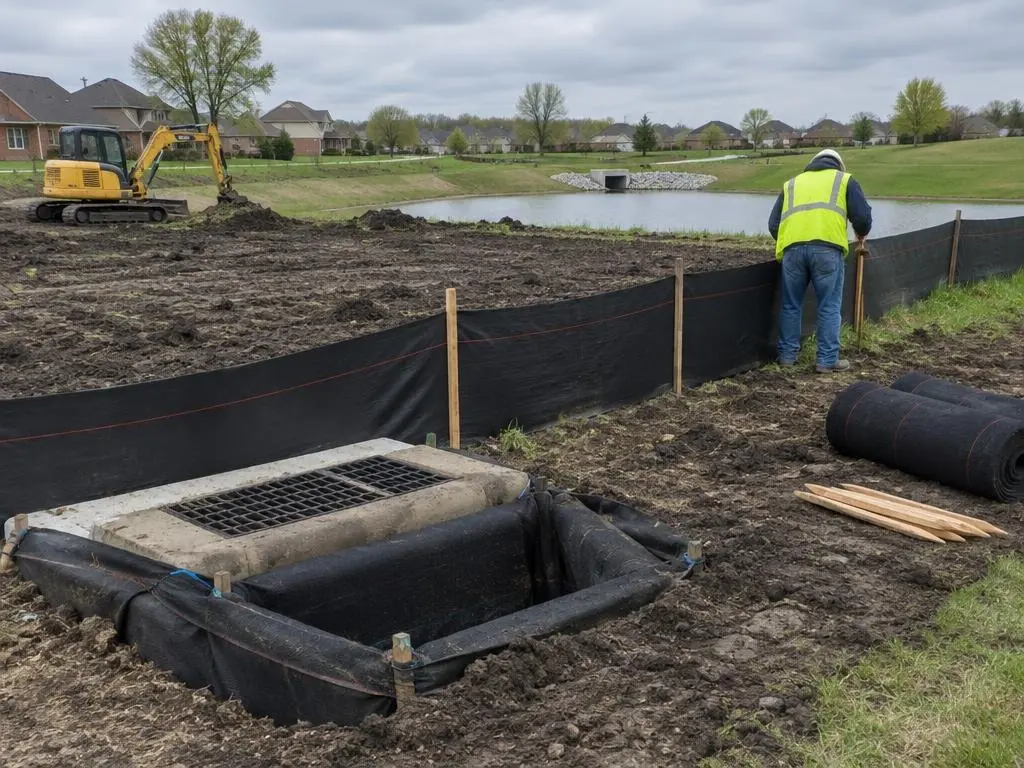
Why Choose Us for New Lawn Hydroseeding
Honest about sod
If sod suits your yard better, we say so.
Rates from Extension
Seed goes down at University of Illinois Extension rates, not heavier.
Topsoil on its own line
You see exactly what prep costs before you agree to it.
New Lawn Hydroseeding Questions
What does a hydroseeded lawn run in the Chicago area?
Per square foot, national cost guides land between roughly $0.06 and $0.35. HomeGuide's example of a 5,000 sq ft yard comes in between $1,000 and $1,750. Most companies also have a minimum fee, which LawnStarter puts at $300 to $500. Topsoil and grading are extra, and once we have measured, the number we write down is the number you are billed.
Is hydroseed better than sod?
It is cheaper and lets you choose a seed mix for shade or sun, but it takes weeks to fill in and needs steady watering. Sod is instant and controls mud right away but costs more and comes in fewer grass types. Illinois Extension notes that done properly, both end up as the same healthy lawn.
Can I walk on a hydroseeded lawn?
Keep foot traffic, kids and pets off until after the second or third mow. Walking on it early crushes seedlings and leaves footprints in soft soil.
When can I put weed killer on a new hydroseed lawn?
Wait until the lawn has been mowed several times. Many weed products harm young grass, so read the label and ask us if you are unsure.
What if some spots do not come in?
Thin spots usually come from washouts, dry patches or shade. We look at why and reseed those areas, ideally in the late summer window.
New Lawn Hydroseeding Service Areas
- Hydroseeding in Chicago, IL
- Hydroseeding in Naperville, IL
- Hydroseeding in Aurora, IL
- Hydroseeding in Joliet, IL
- Hydroseeding in Plainfield, IL
- Hydroseeding in Oswego, IL
- Hydroseeding in Yorkville, IL
- Hydroseeding in Elgin, IL
- Hydroseeding in Huntley, IL
- Hydroseeding in Lockport, IL
- Hydroseeding in Lemont, IL
- Hydroseeding in Crystal Lake, IL
- Hydroseeding in Highland Park, IL
- Hydroseeding in Lake Forest, IL
- Hydroseeding in Bolingbrook, IL
- Hydroseeding in New Lenox, IL
- Hydroseeding in Algonquin, IL
- Hydroseeding in St. Charles, IL
- Hydroseeding in Romeoville, IL
- Hydroseeding in Lake in the Hills, IL
- Hydroseeding in Wheaton, IL
- Hydroseeding in Minooka, IL
- Hydroseeding in Lisle, IL
- Hydroseeding in Gurnee, IL
Get a New Lawn Hydroseeding Estimate
Free lawn walk-throughs anywhere in Chicagoland.