
Thin, patchy or damaged lawns
Lawn Repair & Overseeding in Chicago, IL
Fixing what is there before tearing it all out.
- No-charge yard walk-throughs with a quote in writing
- Seed mix matched to the sun, shade and soil on your lot
- Watering and first-mow instructions in writing with every job
Bringing a Tired Lawn Back
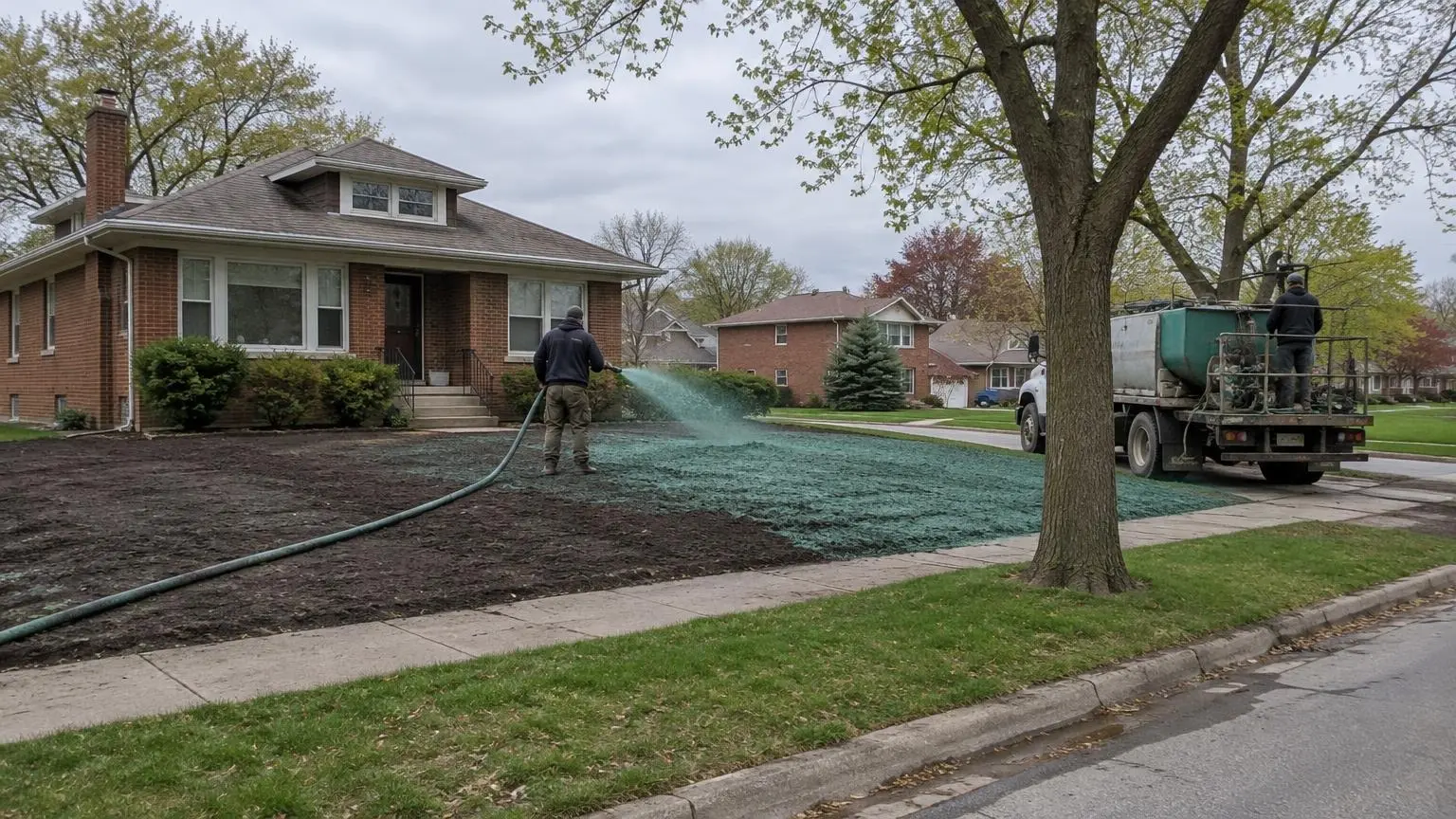
Lawn repair & overseeding is for lawns in Chicago and the suburbs that are not dead, just thin, patchy or worn out. Maybe grubs chewed a section, a hot dry summer left brown spots that never filled back in, shade from maturing trees thinned the grass, or the dog wore a track along the fence. Instead of starting over, we aerate, overseed and patch so new grass fills in among the old, and we only recommend a full lawn renovation when repair will not get you there.
Why lawns thin out here
Cool-season grass in northern Illinois has to get through hot, humid summers with about 17 days at or above 90 degrees in a normal year, then cold winters with measurable snow that can continue into the first or second week of April. Both are hard on turf. Add heavy clay soil that compacts under foot traffic and mowers, and roots end up shallow. Shade is the other big factor: many older neighborhoods and suburbs now have trees that are much larger than when the lawn was planted, and a bluegrass lawn that thrived in sun slowly gives way to moss and bare soil.
Aeration and overseeding
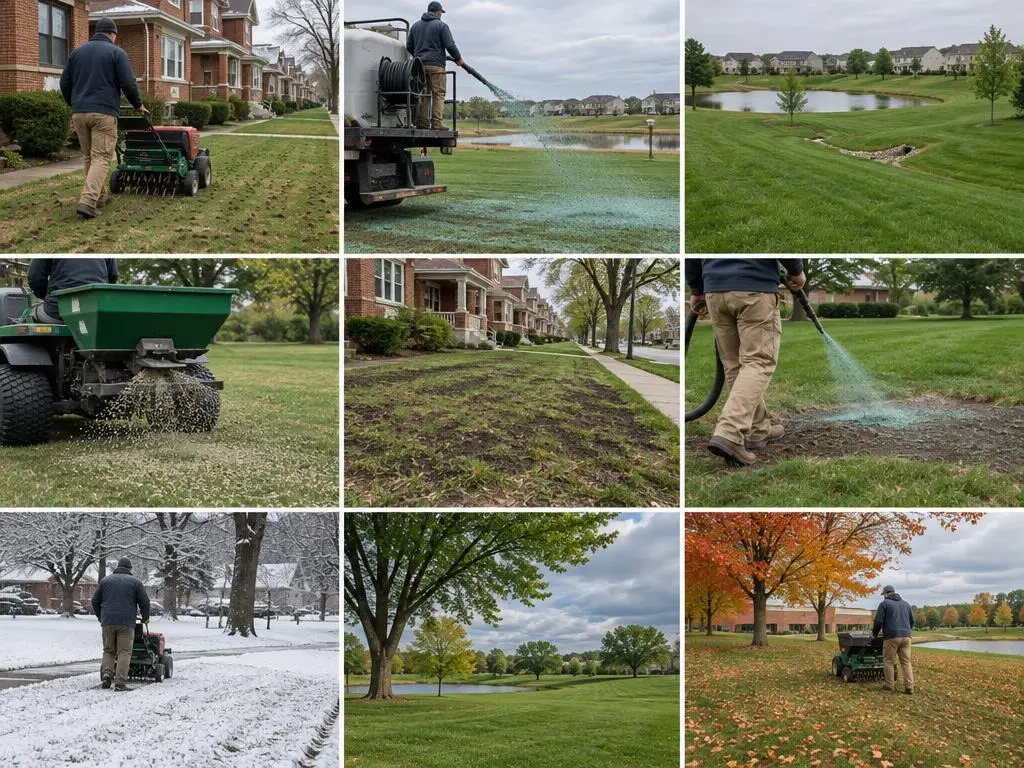
Core aeration pulls small plugs of soil out of the lawn, which relieves compaction and gives seed a pocket to land in. We follow it with overseeding, spreading seed at rates suited to the grass type. Illinois Extension lists typical rates for lawn mixes, from 1 to 3 pounds per 1,000 square feet for a bluegrass blend up to 6 to 9 pounds for tall fescue, and warns that going heavier produces weak seedlings. For overseeding we match the new seed to what is already there, or shift the mix toward fine fescue in shade and tall fescue in heavy-wear areas.
Patch hydroseeding
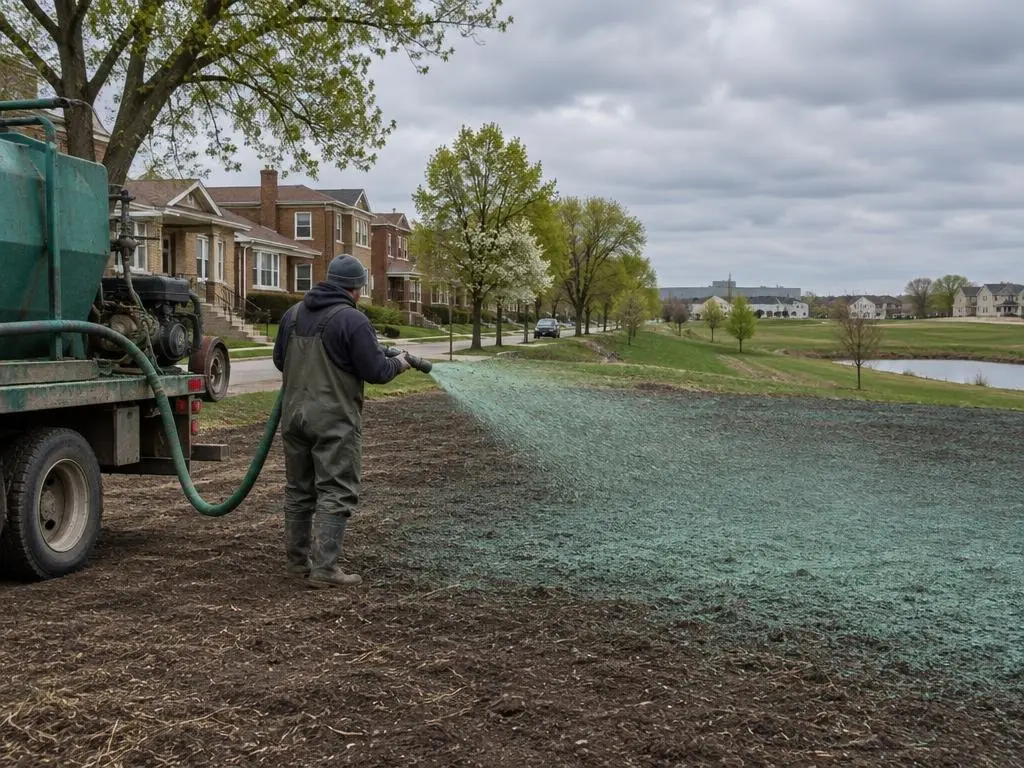
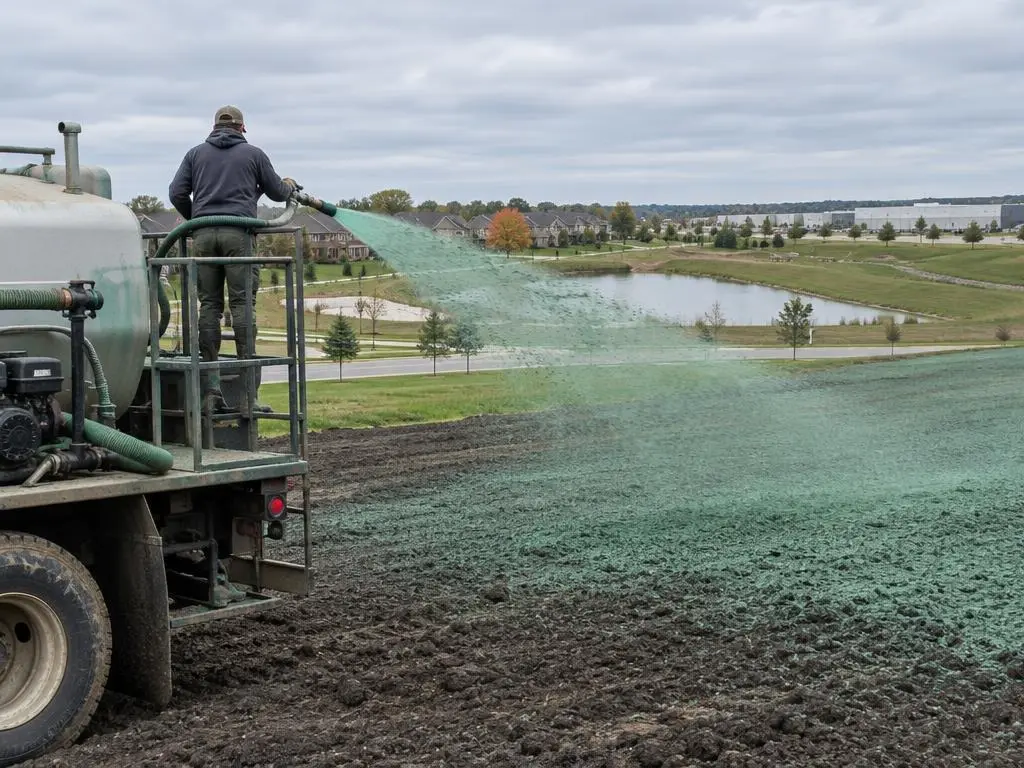
For larger bare areas inside an existing lawn, such as a dug-up utility trench, a spot killed by a spill, or a section lost to grubs, we rake out dead material, loosen the soil, and spray hydroseed right on the patch. The fiber layer keeps seed damp and stops it from shifting, which helps on slopes and in spots that dry out fast. It also blends in more evenly than a sod patch, which can show a seam for a long time.
Full lawn renovation
When more than half the lawn is weeds, or the soil itself is the problem, patching is a waste of money. In that case we recommend lawn renovation: kill the existing cover, correct the grade and topsoil where needed, and hydroseed the whole area. We talk through both options and the cost of each so you can decide.
Timing
Illinois Extension puts the ideal seeding window for northern Illinois at early August to early September, with April as a second choice. Overseeding follows the same calendar. Late summer is ideal because soil is still warm, weeds slow down and the new grass gets two cool seasons, fall and spring, to establish before its first hot summer. Spring overseeding works, but crabgrass control products and new seed often conflict, so we plan around that.
Grubs, disease and drought
If the thin spots came from grubs, reseeding without dealing with them just feeds the next generation. We check the soil under dead patches for grubs and, if they are the cause, talk about timing a treatment before or after seeding. Patches that come back every summer in the same places can point to compacted soil, poor drainage or disease rather than simple wear. And lawns that went brown in a dry spell are often dormant rather than dead; we can usually tell the difference by looking at the crowns, which saves reseeding grass that would have greened up on its own when cooler, wetter weather returned in fall.
Parkways and edges
The grass strip between the sidewalk and the street takes road salt, snow piles and foot traffic every winter. Salt-damaged edges often need the top inch of soil refreshed and reseeding with tougher grasses each spring. Edges along driveways get the same wear from snowblowers and plows. Hydroseed suits these narrow strips well, because the mulch holds seed on the slight crown most parkways have and keeps it from blowing into the street. We can include parkways and driveway edges in a repair visit.
Aftercare and cost
New seed in an existing lawn still needs consistent moisture: short, light waterings through roughly the first few weeks, then deeper and less often. Mow the existing grass high, and hold off on weed killers until the young grass has had several cuts. Overseeding is usually priced by square foot or as a package with aeration. The table shows published ranges from the named guides; there is no reliable published figure for general lawn repair, so we quote that on site after seeing the lawn. What you pay is the figure on your signed quote.
Repair Options
From a light touch-up to starting over.
Core aeration
Plugs pulled to relieve compaction and open the soil for seed and water.
Overseeding
New seed matched to your existing lawn or shifted toward shade or wear grasses.
Patch hydroseeding
Seed and mulch sprayed on bare sections inside an existing lawn.
Shade lawn conversion
Overseeding with more fine fescue where trees have thinned the grass.
Grub and drought damage repair
Dead turf raked out and the area reseeded.
Full lawn renovation
Old cover removed, grade corrected and the whole lawn hydroseeded.
Typical Overseeding and Repair Costs
| Item | Published range |
|---|---|
| Overseeding, per sq ft (Lawn Love) | $0.07 to $0.23 |
| Aerate and overseed, per sq ft (Fixr) | $0.08 to $0.25 |
| Aerate and overseed, per acre (Fixr) | $700 to $1,400 |
| Lawn aeration (HomeAdvisor) | $100 to $400 |
| Reseeding, average (HomeAdvisor) | $1,083 |
| General lawn repair | Set once we see and measure the lawn |
National ranges from the named guides, not Chicago quotes. Lawn size, condition and how much soil work is needed shift the total. Guide ranges, not a bid. The bid we hand you after the visit is binding.
How a Lawn Repair Goes
1. Diagnose
We look at why the lawn thinned: shade, grubs, compaction, drainage or wear.
2. Recommend
Overseeding, patch hydroseeding or full renovation, with the cost of each.
3. Prepare
Mow low, rake out dead material and aerate or loosen bare spots.
4. Seed
Overseed the lawn and hydroseed any larger bare patches.
5. Aftercare
Written watering and mowing plan for the next several weeks.
Why Choose Us for Lawn Repair & Overseeding
Cause before cure
We find out why the lawn thinned so it does not happen again.
Repair first
We only push renovation when repair will not work.
Seed matched to site
Shade, sun and wear areas each get the right grass.
Lawn Repair & Overseeding Questions
What part of the year should a Chicago lawn be overseeded?
Late summer, from early August to early September, is what Illinois Extension recommends for northern Illinois. April is the second choice.
Should I aerate before overseeding?
Usually, yes. Core aeration relieves compaction in clay soil and gives seed better contact with the ground.
Can I overseed a lawn with lots of weeds?
If weeds are scattered, overseeding helps grass crowd them out. If weeds make up most of the lawn, renovation is usually the better use of money.
Why is my grass thin under trees?
Shade and root competition. Overseeding with shade-tolerant fine fescue helps, and in heavy shade a groundcover or mulch bed may work better than grass.
Lawn Repair & Overseeding Service Areas
- Hydroseeding in Chicago, IL
- Hydroseeding in Naperville, IL
- Hydroseeding in Aurora, IL
- Hydroseeding in Joliet, IL
- Hydroseeding in Plainfield, IL
- Hydroseeding in Oswego, IL
- Hydroseeding in Yorkville, IL
- Hydroseeding in Elgin, IL
- Hydroseeding in Huntley, IL
- Hydroseeding in Lockport, IL
- Hydroseeding in Lemont, IL
- Hydroseeding in Crystal Lake, IL
- Hydroseeding in Highland Park, IL
- Hydroseeding in Lake Forest, IL
- Hydroseeding in Bolingbrook, IL
- Hydroseeding in New Lenox, IL
- Hydroseeding in Algonquin, IL
- Hydroseeding in St. Charles, IL
- Hydroseeding in Romeoville, IL
- Hydroseeding in Lake in the Hills, IL
- Hydroseeding in Wheaton, IL
- Hydroseeding in Minooka, IL
- Hydroseeding in Lisle, IL
- Hydroseeding in Gurnee, IL
Get a Lawn Repair & Overseeding Estimate
Free lawn checkups for thin and patchy yards around Chicago.